




Dharamshala — The Tibet Theatre has announced that its new play, entitled PHAYUL (homeland) – a contemporary Tibetan theatre production dedicated to the 1956 Khampa uprising – will premiere in Dharamsala. The cast consists of Tibetan women, whose courage during the early years of the Chinese invasion is rarely highlighted. Rather than a political narrative centred on a few leaders, the play portrays ordinary lives: monks in monasteries, nomadic families and the families of resistance fighters.
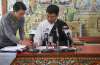
The Tibet Theatre held a press conference at the Tibetan Institute of Performing Arts (TIPA) in Dharamsala on October 7, 2026, to announce its new play, entitled PHAYUL (homeland). Thakpa Tsering, director of the Tibet Theatre, the German director Harry Fuhrmann, and the actors Pema Tsamchoe and Pema were present at the press conference. Thakpa Tsering announced that his new play, entitled PHAYUL (homeland) – a contemporary Tibetan theatre production dedicated to the 1956 Khampean uprising – will premiere at the Tibetan Institute of Performing Arts (TIPA) in Dharamsala (Himachal Pradesh, India) on 9 and 10 October 2026 (performances to the public).
‘The Phayul’ (The Homeland), a major new play in the Tibetan language written by the renowned Indian playwright Abhishek Majumdar and co-directed by Lhakpa Tsering and the German director Harry Fuhrmann. This new Tibetan-language production, which explores the themes of women, resistance and survival in eastern Tibet in the 1950s, will first be performed for Tibetans, particularly schoolchildren in Dharamsala, before going on tour in India and Europe.
‘The Phayul’ is a two-hour play that serves as a prequel to the Tibet Theatre’s famous production ‘Pah-Lak’. Following its premiere in Dharamsala, the play will tour Tibetan schools and communities across India, before travelling to theatre festivals in India and Europe in 2027.
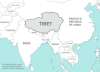
The director Harry, explained why the title “Phayul” was chosen: because “Phayul” means “homeland,” and the homeland is of utmost importance to people who have been forced to flee their native land, such as the Tibetans; they remain attached to it throughout their lives, and it is important to let the rest of the world know what the Tibetans are going through. Tibetans living in Tibet continue to suffer severe repression under the Chinese regime, and because China is attempting to present a distorted version of Tibetan history. In order to raise public awareness of the true history of Tibet, the play “Phayul” recounts the events that took place over a two-week period in eastern Tibet, specifically in Kham.
The Tibet Theatre, in collaboration with playwright Abhishek Majumdar and acting coach Harald Fuhrmann, has spent more than three years developing this production for an international audience, with rehearsals having begun on August 31, 2026.
Lhakpa said, "Phayul is set during the Chinese occupation of eastern Tibet in the early 1950s. It follows how Tibetans responded through both peaceful resistance and armed struggle and how Tibet ultimately came under Chinese control. At its heart are Tibetan women, whose courage during the early years of the invasion is rarely told. Rather than a political narrative about a few leaders, the play centres on ordinary lives: monks in monasteries, nomadic families, and the families of resistance fighters. It explores their choices, courage, and suffering and connects their story to the agency of people living today."
Abhishek Majumdar and Tashi Wangchuk (United States) conducted extensive research in historical texts, while Lhakpa Tsering handled the translation into Tibetan from the English text. The team consists of 10 Tibetan actors, 3 staff members, and 5 volunteers.
"By performing the play in Tibetan, our actors engage deeply with their mother tongue within contemporary theatre. This artistic choice also highlights the urgent threats facing the Tibetan language today, including forced assimilation and cultural erosion." - Lhakpa Tsering, Director, Tibet Theatre. "The entire play is performed in Tibetan, with multilingual subtitles. By placing Tibetan at the center of the performance, the production affirms it as a living language of contemporary theatre," he added.
In 2022 and 2023, Tibet Theatre staged "Pah-Lak", written by Indian playwright Abhishek Majumdar. The production drew national and international attention to Tibet, with wide coverage in newspapers and magazines of the Tibetan struggle, according to Lhakpa Tsering.
"Phayul" has been invited to major theatre festivals including Prithvi Theatre Festival, India (2026), Ruhrfestspiele Recklinghausen, Germany (2027), Theatre Winterthur Festival, Switzerland, the European Tour is supported by Tibet Initiative Deutschland (THD).
Lhakpa said, "Phayul is made possible through the generous support of Tibetan Initiative Deutschland German Aid to Tibetans, The Tibet Funds, Deutsche Tibethilfe e.V,, g8tf, the International Campaign for Tibet (ICT) and NYUAD art and humanities whose commitment to Tibetan arts and culture has helped bring this production to the stage. We would like to express our sincere gratitude to them."
Tibet Theatre is a Dharamshala-based theatre initiative, which was established in 2011, creating over 100 plays in the Tibetan language. Its productions, including "Pah-Lak" (2022-23) and "Phayul" (2026), bring Tibetan history and lived experience to audiences in India and around the world.
Phayul brings an all-Tibetan ensemble to the stage to examine the pivotal events of the 1950s resistance, the human impact of occupation, and the urgency of preserving Tibetan language and heritage.