



New Delhi — Four Tibetan activists from Students for a Free Tibet arrested for unfurled two banners reading “Xi Jinping = Genocide” and “Tibet is facing Ecocide: Free Tibet” ahead of Xi visit to India, on September 11, 2026. The demonstration directly challenges Beijing’s narrative of multilateral cooperation, calling on BRICS leaders to confront China’s illegal occupation of Tibet, systemic human rights violations, and expanding border aggression.
Three Tibetan activists, Tenzin Nordon, Karma Dolma, Tenzin Tsephel arrested for unfurled two banners reading “Xi Jinping = Genocide” and “Tibet is facing Ecocide: Free Tibet” with a Tibetan National Flag near Bharat Mandapam, the venue of the the BRICS Summit around 7:30 am, on September 11, 2026, ahead of Chinese President Xi Jinping’s arrival for the BRICS Summit, on September 12, 2026. Students for a Free Tibet stated, "The demonstration directly challenges Beijing’s narrative of multilateral cooperation, calling on BRICS leaders to confront China’s illegal occupation of Tibet, systemic human rights violations, and expanding border aggression."
"For over six decades, Tibetans have resisted Beijing's iron-clad control. Under Xi Jinping’s dictatorship, China has escalated policies aimed at eradicating Tibetan culture and identity, forcibly assimilating over one million Tibetan children from age 4-18 in colonial boarding schools, and enforcing strict "ethnic unity and progress" laws designed to erase Tibetan identity in a single generation," the Tibetan NGO said.
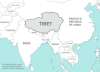
Tenzin Nordon, activist from Students for a Free Tibet-India said, “ Tibet serves as the source for Asia’s major river systems, including the Brahmaputra and the Indus, feeding nearly 2 billion people downstream. While Xi Jinping preaches global cooperation, Beijing uses its illegal occupation of Tibet to hold South Asia’s water supply hostage. By seizing control of Tibet’s glaciers, China unilaterally dictates the flow of the transboundary rivers with zero transparency, no binding treaties, and complete disregard for downstream nations. ”
Karma Dolma, activist from Students for a Free Tibet-India said, “For India, Nepal, Bangladesh, and the downstream region, Tibet’s water is an urgent national security issue. The recent Tibet-Nepal flash floods is a stark warning. The proposed 60,000-megawatt Super Dam at Medog, situated near the border of Tibet and India, is a water bomb in the making, acts as an ecological threat to Northeast India and downstream Bangladesh. BRICS rhetoric on 'win-win' partnerships rings hollow while one member state unilaterally builds mega-infrastructure on a Tibet’s rivers- Asia’s lifeline without community’s consultation. ”
"We must remember that India and Tibet enjoyed a long history of peaceful co-existence, shared heritage, and friendly bilateral relations until China’s illegal occupation of Tibet in 1949. India’s Eastern Himalayan frontier, specifically the Arunachal border, was drawn up and negotiated with Tibet in 1914 at the Simla Convention. China's persistent expansionism along the Line of Actual Control - the remapping more than 100 locations in Arunachal Pradesh, extensive militarization of the Tibetan Plateau, and strategic border village construction up to the Indian frontier—is not just a development project, but the systematic encroachment to assert geopolitical dominance. Lasting stability along India’s Eastern frontier cannot be achieved without asserting the historic and geographic agreements made with independent Tibet in 1914," the Tibetan activists said.
Tenzin Tsephel, activist from Students for a Free Tibet- India said "For over seven decades, border friction from Eastern Ladakh to Arunachal Pradesh, from Galwan to Tawang, has been treated as localised disputes rather than India’s border encroachment: the realisation of a long-standing strategic design that views Tibet as the palm and the Himalayan territories as its fingers. India must stand firm against Beijing’s expansionist blueprint, True stability along the frontiers can only be secured by speaking up boldly for Tibet’s historical independent status and anchoring modern diplomacy in the legal foundation of the 1914 Simla Convention. "
In response to this urgent situation, SFT strongly condemned and opposed the Chinese Communist Party’s exploitative and oppressive policies. They further released five-point demands to China, India and the world leaders:
1. BRICS leaders should condemn China’s illegal occupation of Tibet, systemic human rights violations against international law.
2. China must immediately halt forced cultural assimilation, close colonial residential schools, and repeal "ethnic unity" laws aimed at erasing Tibetan identity.
3. China should stop unconsulted mega-projects—including the Medog Dam-and commit to full transparency, independent environmental assessments, and binding hydrological data sharing with downstream nations.
4. We call on India for an immediate bold counter move and sustainable action against China's Indo-Tibet border encroachment by asserting the historic and geographic agreements made with independent Tibet in 1914.
5. We call on Indian Prime Minister Narendra Modi and Foreign Minister Dr. S. Jaisankar to raise the above mentioned concerns in their bilateral talks with President Xi Jinping. The time for passive observation is over; the future of regional stability and human rights hinges on a united, unwavering stand against China's aggressive agenda.