


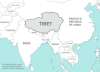



New Delhi — Hundreds of Tibetans took to the streets in Majnu ka Tila, Delhi, on September 11, 2026, launching a fierce protest against Chinese President Xi Jinping ahead of his arrival for the BRICS summit. The demonstrators issued an urgent call for Beijing to immediately repeal its controversial "Law on Promoting Ethnic Unity and Progress," branding it a deceitful policy designed to mask an aggressive assimilation agenda. Protesters warned that while the legislation is framed around national progress, its true, malicious objective is the systematic erasure of the Tibetan language, religion, culture, and unique ethnic identity.
The protest was organised by the Tibetan Youth Congress (TYC), the largest Tibetan NGO in exile, the march began at 10:00 AM on September 11, 2026, winding through the streets of Majnu ka Tila, Delhi. Demonstrators flooded the streets holding high-visibility signs that read "Xi Jinping, You Are Not Welcome" and "Repeal the Genocide Law—'Law on Promoting Ethnic Unity and Progress.'" As they marched, the air filled with defiant, synchronised chants exposing Beijing's human rights record and cultural suppression. The crowd roared powerful slogans including "Free Tibet," "China Out of Tibet Now," "China Lies, People Die," "Tibet Belongs to Tibetans," and "Tibet Was Never a Part of China." Further condemning the Chinese Communist Party's assimilation policies, protesters shouted "Stop the Genocide in Tibet," "Stop Cultural Genocide," "Stop the Torture, Stop the Killing in Tibet," and "Save Tibetan Language, Save Tibetan Culture." Highlighting the strategic geopolitical stakes for their host nation, the marchers also raised a vital warning: "Tibet's Independence is India's Security!"
The Tibetan Youth Congress (TYC) held the opening event at the Tibetan Children's Village (TCV) Day School in Majnu ka Tila, Delhi, drawing a prominent delegation of Tibetan leaders who later joined the street protests. The event featured addresses from key political figures, including Gyari Dolma, former Minister (Kalon) of the Central Tibetan Administration (CTA), alongside TYC Vice President Tashi Dharjee, General Secretary Lobsang Tenzin and former Deputy Speaker Acharya Yeshi Phuntsok. Members of the Tibetan Parliament-in-Exile—including Wangdu Dorjee, Kunchok Rinchen, Gyaltsen Choekyi, marched alongside hundreds of protesters to show undivided solidarity against the Chinese regime.
Tibetan Youth Congress issued a statement and it said,"The Tibetan Youth Congress congratulates India on hosting the BRICS Summit 2026 and commends its leadership in advancing dialogue, cooperation, partnership, and shared prosperity among BRICS member states. We also express our deep appreciation for India's longstanding hospitality towards the Tibetan people and the Tibetan Government-in-Exile for more than six decades. We extend our best wishes for a successful and constructive summit that strengthens mutual understanding, regional stability. and mcaningful coopcration among participating nations."
"The Tibetan Youth Congress vehemently condemns the participation of Chinese President Xi Jinping in the 2026 BRICS Summit. Xi Jinping is the primary architect of the ongoing cultural genocide in Tibet and bears direct responsibility for the systematic loss of Tibetan lives both through state-sanctioned violence and the avoidable tragedies of recent environmental disasters caused by uncontrolled engineering on the Tibetan Plateau," the Tibetan NGO said.
"We also urge India and other member states to raise the issue of Tibet with the Chinese leadership at this important meeting to advance international cooperation and strengthen global governance. For the past seven decades. Chinese policies in Tibet have resulted in the systematic erosion of Tibetan culture, language, religion, and identity, such practices that many scholars, parliamentarians, and human rights advocates have described as cultural crasure and forced assimilation. Recent legislation of "promotion of ethnic unity and progress law" has further intensified the systematic assimilation of Tibetans and the marginalization of their distinct cultural identity. The law was imposed on July 1, 2026 and the very next day. Tibctan martyr Lobga Rangzen self-immolated before the UN Headquarters for the cause of Tibet, becoming a tragic reminder of China's repression and nearly 170 Tibetans have self-immolated in protest," the Tibetan activists from TYC said.
"During International cooperation among member states, they cannot remain blind to the realities of Chinese colonial rule in Tibet. Genuine global cooperation and responsible governance must also address the human rights, cultural, and political consequences of policies that threaten the survival of Tibet's distinct identity and heritage including other occupied nations of China," the Tibetan activists explained.
"We condemn China's interference in Tibetan Buddhism and violating the religious freedom and traditions of Tibetan Buddhists. The recognition of His Holiness the 15th Dalai Lama is a deeply spiritual matter that must be conducted according to Tibetan Buddhist traditions, free from political coercion or state interference. His Holiness the great 14" Dalai Lama has clearly affirmed that the Gaden Phodrang Trust holds sole authority over the recognition of his future reincarnation. China has no legitimate religious authority to dictate or interfere in this process," they added.
"China must immediatcly and unconditionally release all Tibetan political prisoners, human rights defenders, climate and environmental activists, religious figures, artist and other Tibetans detained for peacefully exercising their fundamental rights including the 11th Panchen Lama, Gedhun Chockyi Nyima," they demanded.
"The Tibetan Youth Congress condemns China's drastic colonial legislation of "Ethnic Unity and Progress law": which seeks to institutionalise the erasure of Tibet's distinct identity, culture, language, religion and heritage under the guise of ethnic unity and development. Since China's military occupation of Tibet. India and China have repeatedly attempted to address their border disputes. yet a lasting solution remains clusive, as there can be no lasting solution without addressing the fundamental issue of Tibet. In the name of development and progress. China has pursued extensive exploitation of Tibet's fragile environment through large-scale mining, dam construction, river diversion and other major infrastructure projects, resulting in degradation of Tibet's environment. The recent flash flood in the Nepal-Tibet border serves as a stark reminder to the global community that no neighboring state can afford to remain silent on the environmental destruction and large-scale dam construction taking place in Tibet," the Tibetan activists explained.
TYC said, "Tibet is Asia's water lifeline and one of the world's most fragile and scismically active regions. Unchecked dams, infrastructure projects, and control of Tibet's rivers pose growing environmental and security risks to Tibet and millions of people across India, Bangladesh, and Southeast Asia countries. With climate and scismic risks intensifying, the international community can no longer remain on the sideline."
"We call on governments, UN bodies and regional institutions to demand transparency, independent environmental assessments, meaningful consultation with affected communities and binding cooperation on transboundary rivers. China's control over rivers originating from occupied Tibet could have catastrophic consequences for India and Bangladesh including countries across southeast Asia such as Vietnam, Laos,Thailand and Cambodia. Tibet's waters must not be weaponised or used as instruments of gcopolitical control. Protecting these shared rivers is a collective responsibility, essential to the security and future of Asia," they urged.
"As India hosts the BRICS Summit, we respectfully remind the international community that Tibet is not a forgotten issue. Tibet is a living question with consequences for human rights, religious freedom, environmental protection, water security, India's national security, and the future stability of Asia," the Tibetan NGO said.
"The Tibetan Youth Congress believes that peace cannot be built upon silence, stability cannot be achieved through repression and desclopment cannot justify the destruction of a people's identity or environment. Tibet must not be forgotten. The Tibetans must not be silenced. And the question of Tibet must not be ignored," the Tibetan activists concluded.