


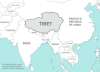



Washington D.C — Ahead of the U.S.–China summit, a group of 37 U.S. Congressmembers wrote a formal letter to President Donald Trump, to condemn Beijing's newly enacted "Law on Promoting Ethnic Unity and Progress". The bipartisan coalition warned that the legislation grants Chinese authorities "sweeping authority to prosecute Tibetans, Uyghurs, and other ethnic and religious minority groups" under the guise of protecting national unity and Communist Party ideology.
The letter sent to President Donald Trump on September 23, 2026, which was led by Representatives Jamie Raskin, Jim McGovern, Gregory Meeks, and signed by Ro Khanna, Member of Congress, Mark Pocan, Member of Congress Member, and Andre Carson, member of Congress, Maxine Waters, Member of Congress, Eleanor Holmes Norton, Member of Congress, Llo Doggett, Member of Congress, Pramila Jayapal, Member of Congress, James R. Walkinshaw, Member of Congress, Richard E. Neal, Member of Congress, Nancy Pelosi, Member of Congress, Grace Meng, Member of Congress, Sydney Kamlager Dove, Member of Congress, Jasmine Crocket, Member of Congres, Debbie Wasserman Schultz, Member of Congress, Jake Auchincloss, Member of Congress, Veronica Escobar, Member of Congress, Raja Krishnamoorthi, Member of Congress, Ami Bera, M.D. Member of Congress, Stephen F. Lynch, Member of Congress, Jerrold Nadler, Member of Congress, Jan Schakowsky, Member of Congress, Dina Titus, Member of Congress, Ilhan Omar, Member of Congress, Syavia R. Garcia, Member of Congress, Madeleine Dean, Member of Congress, Steve Cohen, Member of Congress, Kathy Castor, Member of Congress, Shri Thanedar, Member of Congress, Brad Sherman, Member of Congress, Thomas R. Suozzi, Member of Congress, Bradley Scott Schneider, Member of Congress, Al Green, Member of Congress, Mark DeSaulnier, Member of Congress, and George Latimer, Member of Congress
The letter stated, "As you engage with President Xi Jinping this month, we urge you to express profound opposition to the Ethnic Unity and Progress Law recently implemented by the Chinese government.'
"This law grants Chinese authorities sweeping authority to prosecute Tibetans, Uyghurs and other ethnic and religious minority groups that it broadly accuses of undermining national unity and Communist Party ideology.
"Moreover, the extraterritorial scope of the law means that it will dramatically accelerate China's transnational repression of critics living in the U.S.' The State Department has itself recognized these ramifications in a statement calling the Ethnic Unity and Progress Law "problematic.' During your meeting with Xi Jinping, it is imperative that you continue to voice your administration's disapproval of this affront to the fundamental freedoms of minority communities, human rights advocates and U.S. citizens.
"Enacted under the guise of promoting "social harmony" on March 12, 2026, the Ethnic Unity and Progress Law is in fact an insidious declaration of China's intent to further repress religious freedom and the freedom of group association. One of the most troubling provisions of the law would require religious activities to undergo "Sinicization," a process championed by Xi Jinping and used in reference to the complete subordination and assimilation of religious and ethnic groups to the political ideology of the Chinese Communist Party (CCP). Well before the Ethnic Unity and Progress Law came into effect on July 1, 2026, China had already embarked upon a concerted campaign to destroy the shrines of Uyghur Muslims, remove Tibetan Buddhist statues from monasteries, censor the holy texts read in Christian churches and otherwise purge houses of worship in the name of "Sinicization." With the additional legal cover provided by their new law, Chinese authorities are escalating their systemic persecution of minority faith communities.
"Elsewhere in the text of the law, the Chinese government asserts the alarming power to extend its repressive tactics into U.S. borders and against U.S. citizens. Article 63 plainly states that organisations and individuals outside China will be held legally accountable for activities that China deems are undertaken in opposition to national unity and progress.' In codifying this language, China thus purports to exercise jurisdiction over people who are neither Chinese citizens nor residents of the country and who are merely exercising their freedom of expression.' For dissidents who fled China in pursuit of the rights and freedoms we enjoy in America, the clause amounts to a promise that they will continue to be pursued by an oppressive state adamant about suppressing their speech and beliefs.
"To grasp the consequences of such a promise, one need only examine the tactics China has increasingly deployed against its U.S.-based critics, including U.S. citizens. In the last couple of years alone, the federal government determined conclusively that Chinese officials intimidated student activists who spoke out against its rule, imposed monetary bounties on Hong Kong activists, launched a cyber-hacking campaign targeting dissidents and employed other sophisticated strategies to silence pro-democracy voices in the U.S." Just this summer, Chinese authorities detained Min Zin, a U.S. citizen and doctoral candidate, upon his arrival in the country for an academic conference. Today, who actively promoted democratization in the South Asia, remains in the Chinese custoday. Absent robust efforts to contest the Ethnic Unity and Progress Law, he will be just one of many more targeted U.S. citizens.
"Min Zin's story, along with the broader trends indicating an intensification of China's crackdown on religious minorities and dissent abroad, should serve as a warning to us all. If left in place, the Ethnic Unity and Progress Law will expedite ongoing transnational repression, religiously motivated and identity-based persecution and other anti-democratic maneuvers of the Chinese government. In fact, emerging evidence suggests that China has actively begun to leverage the measure against the communities it has historically sought to marginalize. Uyghur-language signs are reportedly being removed from city streets, and during a recent tour of Tibet, a top CCP leader pressed authorities to "adapt" Tibetan Buddhism in accordance with the Ethnic Unity and Progress Law.'
"We greatly appreciated the State Department's earlier statement expressing concerns about the Ethnic Unity and Progress Law. ' However, a president's personal advocacy has unparalleled power to elicit meaningful change. During your upcoming meeting with Xi Jinping, we therefore urge you to ask for the repeal of the Ethnic Unity and Progress Law.
"At stake are our national security, sovereignty and basic human rights all over the world," the letter concluded.