



Dharamshala — Ranking Member Ro Khanna of the House Select Committee on the Strategic Competition Between the United States and the Chinese Communist Party (CCP) and Ranking Member Jim McGovern of the Congressional-Executive Commission on China jointly held a shadow hearing titled "The Void in China Policy: Why Human Rights Must Be on Trump’s Agenda with Xi at the White House," on September 15, 2026.
The testimony featured a panel of witnesses, including Tahir Imin, Founder and Director, Uyghur Post, Palden Gyal, President, International Tibet Media Organization, Yaqiu Wang, Fellow at the Penn Project on the Future of U.S.-China Relations at the University of Pennsylvania, Jonathan Stivers, U.S. Director, Committee for Freedom in Hong Kong; Commissioner, U.S.-China Economic and Security Review Commission.
Representative Greg Stanton said, "In 2024, 650,000 Tibetans were forced from the homes as part of a CCP program to systematically transfer what it called “rural surplus labor.” Since 2000, it is estimated that almost 3.5 million Tibetans have been forced from their homes by the CCP, including through what are called "old village relocation" programs. In 1963, images of a Buddhist monk setting himself on fire to protest the South Vietnamese government shocked the conscience of our world. Since 2009, at least 170 Tibetans have self-immolated to protest the CCP's repression. We have to ask ourselves: where is the conscience of our world today?."
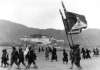
Ranking Member McGovern said,"We convene this hearing to shine a light on the severe violations of human rights by the government of China, and to assess our government's performance in holding it accountable. Human rights in China has long been an area of bipartisan concern and productivity here in the Congress. I think of Congresswoman Nancy Pelosi standing in Tiananmen Square with Republican and Democratic colleagues in 1991, bravely unfurling a banner to the victims of the massacre before being whisked away by police."
"I think of President George W. Bush and the bipartisan House and Senate leadership in 2007 presenting the Congressional Gold Medal to His Holiness the Dalai Lama. I think of Marco Rubio and myself as co-chairs of the CECC, working together to craft and pass the Uyghur Forced Labor Prevention Act of 2021 into law. I think of institutions we created to monitor the Chinese government's behavior, the CECC, Select Committee, the U.S. Security and Economic Review Commission – and we welcome one of its commissioners today as a witness. There has been consensus that U.S. policy toward China must include a moral dimension; that we must speak out for the freedoms of those who cannot advocate for themselves. That we must deploy policy tools to press the Chinese government to respect human rights," McGovern added.
Speaker Emerita Pelosi said,"if we do not speak up for human rights in China because of commercial interest, we lose all moral authority to speak up for human rights any place in the world."
Representative Seth Moulton said,"China under Xi Jinping has spent the past decade and a half systematically eroding the rights of everyone living in China. For most of that time, the United States has pushed back in a strongly bipartisan manner."
In his statement, Palden Gyal said," Since taking control of Tibet, the CCP has used many tactics to erase Tibetan identity. I know this firsthand, having been born in Tibet and lived there until I was 20, when I escaped into exile. During a brief opening in the 1980s, Tibetans worked hard to preserve their heritage. By the 1990s, the CCP saw that Tibetan language and traditions kept the Tibetan spirit alive, so it began targeting monasteries and schools directly."
"In 1996, Beijing launched its "Patriotic Education" campaign, forcing monks, nuns, and students to accept Chinese rule and the Party's version of history. Work teams entered monasteries daily to carry out indoctrination. Monks and nuns are forced to recognize Beijing's chosen Panchen Lama, and denounce His Holiness the Dalai Lama," he added.
He continued by saying,"Tibetans have never stopped resisting. Major protests broke out in the late 1980s and in 2008. More than 170 Tibetans have set themselves on fire to protest Chinese repression. Loga Rangzen, a Tibetan American, was the latest, setting himself on fire outside the United Nations building in New York this July 2, 2026."
"On March 12, 2026, China's National People's Congress passed a sweeping new law-the 65-article, so-called "Ethnic Unity and Progress Promotion Law"- effective July 1. It pressures Tibetans to give up their language, religion, and traditions and assimilate into mainstream Chinese culture, makes Chinese the primary language of instruction, and expands the state boarding school system," he explained.
"China keeps tight control over information coming out of Tibet. Independent journalists are not allowed in. This matters for human rights. Without outside observers, the government can hide abuses. It also gets to decide what story the world hears. That is why restoring Tibetan-language broadcasts by Voice of America (VOA) and Radio Free Asia (RFA) is so important," he said.
Palden said, "On September 24, Xi Jinping will visit Washington seeking better relations with the US. But in Tibet, Beijing is accelerating its campaign to erase Tibetan culture under the misleading banner of "ethnic unity."
"What is happening today is, in some ways, more dangerous than the Cultural Revolution. The CCP is deliberately cutting generational ties to force complete assimilation. Starting in kindergarten, Chinese is the only language of instruction and nearly one million Tibetan children have been taken from their families and placed in state-run boarding schools," he said.
"Just days ago, an 87-year-old grandmother in Tibet told me: 'My heart is warm because His Holiness the Dalai Lama is still alive. But I am deeply saddened because my grandchildren speak to me only in Chinese. I cannot understand them, and we cannot talk.' Her words show how quickly the Tibetan language is disappearing. Losing it means losing an ancient civilization," he explained.
Palden further said, "China's Ethnic Unity Law doesn't just apply inside China—it applies to citizens of other countries. Article 63 says China can prosecute anyone, anywhere, for 'undermining ethnic unity.' This means Tibetans, Uyghurs, Mongolians, or any American who simply supports their rights could be prosecuted."
"I know for certain that any action undertaken by the United States impacts the people of Tibet. Therefore, I would like to make the following recommendations for the US to hold the Chinese government accountable and stand with the Tibetan people in defense of their fundamental rights—these will be a powerful message to Xi Jinping when he visits Washington later this I urge Congress to pass the recently introduced Assuring the Future of Tibet Act (AFTA), which affirmed Tibet's future must be decided by the Tibetan people themselves," he said.
"I urge President Trump to directly raise Tibet in his meeting with Xi Jinping, urging him to respect Tibetan human rights and religious freedom and to resume dialogue with His Holiness the Dalai Lama and his representatives," he concludede his statement.