

Dharamshala — Tibetan university students in Lhasa are required to demonstrate their "loyalty" to the Chinese Communist Party by writing short essays criticising His Holiness the 14th Dalai Lama; representatives from Tibetan student groups are required to deliver public speeches affirming their “loyalty” to the CCP and stating their positions on the issues of Tibetan independence and Hong Kong.
According to the reliable source, Tibet University in Lhasa locked down every March, students are required to obtain signatures from three parties—their class advisor, student counselor, and department head—before they are permitted to leave the grounds. Additionally, each week, Tibetan students are required to demonstrate their “loyalty “ to the Chinese Communist Party by writing short essays criticising His Holiness the 14th Dalai Lama; representatives from Tibetan student groups are required to deliver public speeches affirming their “loyalty” to the CCP and stating their positions on the issues of Tibetan independence and Hong Kong.
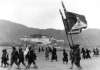
On March 10, 1959, thousands of Tibetans gathered outside the Potala Palace and at Norbu Lingka to protest against China and protect His Holiness the Dalai Lama. On 12 March, hundreds of Tibetan women gathered outside the Potala Palace and protested against the Chinese People’s Liberation Army and its invasion. On March 17, His Holiness the Dalai Lama escaped from Lhasa and sought refuge in India.
That is why the Chinese authorities locked up Tibetan university students in March, a month considered sensitive by the Chinese government. The authorities were afraid that Tibetans might protest against the Chinese government’s repressive policies in Tibet and demand freedom and the return of His Holiness the Dalai Lama, as had been the case between 1987 and 1989, and again in 2008.
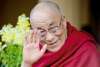
Tibetans in Tibet have immense faith and trust in His Holiness the Dalai Lama, but this is unacceptable to the Chinese government. That is why the authorities have banned photographs, books and teachings of His Holiness the Dalai Lama in Tibet, and anyone found in possession of them risks arrest, brutal torture and a prison sentence of several years.
Another source reveals that the Chinese authorities at the Tibet University, in Lhasa, have introduced a specialised political course entitled ‘An Introduction to Marxist Concepts of the State, History, Ethnicity, Culture and Religion, and Their Implementation in Tibet’. This course is taught jointly by a lecturer and a ‘political adviser’, the latter being, in reality, a police officer.
Chapter 1 (section 4) of the course, which states that ‘to govern the country, one must govern the borders; to govern the borders, one must first stabilise Tibet’ and ‘make the preservation of national unity and the strengthening of ethnic solidarity the focus and priority of action in Tibet’.
Section 4 (IV) of the course also emphasised the need to “wage a relentless struggle against separatism”, referring to Tibetans in exile, the Tibetan government-in-exile and His Holiness the Dalai Lama. The Chinese government labels the Dalai Lama, without evidence, and describes the Dalai Lama – a Nobel Peace Prize laureate, an iconic figure for world peace and a symbol of compassion – as a ‘separatist’. The real separatists are the Chinese government, which has illegally occupied Tibet, thereby separating the spiritual leader from his people, children from their parents and family members from one another.
Chapter 5 (section 4) of the course covers the implementation of the Chinese Communist Party’s religious policy in Tibet. The aim is to ‘sinicise’ Tibetan Buddhism, imbuing it with a distinctly Chinese character and ensuring loyalty to the CCP. Anyone who demonstrates their faith in His Holiness the Dalai Lama by sharing his photograph or keeping it in secret will be arrested, beaten and face a prison sentence.
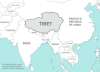
The Chinese government also states, in Chapter 2 (Section 4) of the course, that "Tibet has been part of China since ancient times". However, there is no evidence to support this claim that "Tibet has been part of China since ancient times"; Tibet was in fact an independent country and has never been part of China.
Since July 2026, the Chinese authorities, notably the police and the army, have relaunched their propaganda campaign so-called the "Sweeping Black and Eliminating Evil", which will continue until next year. Originally scheduled to last three years (2018–2020), this campaign has been extended in recent years. This year, the crackdown has intensified online, and the police have been authorised to arrest anyone committing an act contrary to the Chinese Communist Party.
China-Tibet: The one-thing you need to know:
Over the past 70 decades, there has been ongoing political repression, social discrimination, economic marginalization, environmental destruction, and cultural assimilation, particularly due to Chinese migration to Tibet which is fueling intense resentment among the people of occupied Tibet.
The communist-totalitarian state of China began its invasion of Tibet in 1949, reaching complete occupation of the country in 1959. Since that time, more than 1.2 million people, 20% of the nation's population of six million, have died as a direct result of China's invasion and occupation. In addition, over 99% of Tibet's six thousand religious monasteries, temples, and shrines, have been looted or decimated resulting in the destruction of hundreds of thousands of sacred Buddhist scriptures.
Until 1949, Tibet was an independent Buddhist nation in the Himalayas which had little contact with the rest of the world. It existed as a rich cultural storehouse of the Mahayana and Vajrayana teachings of Buddhism. Religion was a unifying theme among the Tibetans -- as was their own language, literature, art, and world view developed by living at high altitudes, under harsh conditions, in a balance with their environment.