



Dharamshala — Chinese authorities forcibly shut down another Tibetan educational institution, the Golok Tadrak Orphan School in Machen County, Golog, eastern Tibet, in early October 2026. This closure is part of Beijing's aggressive assimilation campaign, accelerated by the recently implemented "Law on Ethnic Unity and Progress".
According to a reliable source, the Golok Tadrak Orphan School (མགོ་ལོག་རྟ་བྲག་དྭ་ཕྲུག་སློབ་གྲྭ) in Machen County, Golok, eastern Tibet, was forcibly shut down by Chinese authorities in early October 2026.
Since 2020, the Chinese authorities have pressured the school to replace all Tibetan textbooks with Mandarin Chinese versions. In 2021, the Chinese authorities officially ordered the permanent suspension of student enrolment. The last graduation took place in June 2026, after which teaching operations ceased entirely under government orders, leaving the complex vacant. Then, in early October, the school shut down completely.
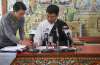
Thupten Nyima (Principal Father) delivered an emotional farewell address to the remaining 300 orphans, on September 2, 2026. Standing before the evicted children, Thupten Nyima wept openly as he sang a traditional Tibetan song about the pain of forced separation on earth, praying that they would all have the karmic fortune to meet again one day.
The students are forced into state-run, centralised public boarding schools. They are compelled to learn entirely in Mandarin Chinese and are subjected to mandatory state political ideology classes. They are also permanently cut off from their native Tibetan-medium education.
Some students were denied enrolment in local state schools due to strict residency registration (hukou) barriers, leaving them with no access to local, state-funded education. They were forced to return to distant, nomadic regions. Orphans (no surviving family) are left entirely adrift and unattended, with no legal guardian to take them in. Chinese authorities have banned the public from setting up alternative private shelters for these children, who now face immediate housing and food insecurity.
This closure is part of Beijing's aggressive assimilation campaign, accelerated by the recently implemented "Law on Ethnic Unity and Progress." By shutting down Tibetan-run schools, authorities are stripping vulnerable children of parental care and cutting young students off from their native language, culture, and traditions.
The Orphan School was founded in 2006 by the late Dr Tawu Lobsang Palden and was run by Thupten Nyima, also known as "Principal Father". The school provided orphaned children with free education, shelter and meals. The institution also supported its graduates in pursuing higher education, acting as a parent would.
The institution provides nine years of compulsory education, covering primary and junior high school, alongside intermediate and advanced vocational and technical programmes. More than 600 students have graduated from various vocational programmes and are now active in a wide range of professional fields.
The school taught Tibetan, Chinese, English, history, literature, mathematics, science, physics, chemistry, computer studies, Tibetan history and culture, basic Buddhist philosophy and ethics. The core medium of instruction for all general subjects was Tibetan. Mandarin Chinese was taught extensively as a second language to prepare students for the national high school entrance exam (Zhongkao).
It also offers vocational training in fine arts, including traditional Thangka sewing and painting, Tibetan craftwork and tailoring. The school was renowned for its Thangka craft programme. This ran alongside standard academic classes, ensuring that students who did not progress to higher education graduated with highly sought-after artisan skills.
In its first year of operation in 2006, the Golok Tadrak Orphan School enrolled 30 students. Thupten Nyima and staff recruited these children one by one from nomadic areas.
In 2015, the first batch of students at the Golok Tadrak Orphan School finished their middle school entrance exams. The students achieved excellent results, bringing tears of joy to Thupten Nyima and the school's teachers. Thupten Nyima said to a media, "At that time, I vowed that I would make sure my children received a better education and went to better high schools."
Thupten Nyima travelled to Shanghai himself to complete the enrolment procedures for four of the children, and travelled to Shenyang for the other 23. Thupten Nyima said, "After sending the children to Shenyang and completing their enrollment procedures, when I was about to leave, they all hugged me and cried, not wanting me to go. I promised them that I would definitely come to see them during the National Day holiday." To keep his promise, during that year's National Day holiday, Thupten Nyima took a two-day, two-night train journey to Shenyang to visit the children. "I took them to the zoo and the museum, wanting them to feel the love and care of their parents, just like other children."
Lhage Dolma was one of four students who went to university in Shanghai. She excelled in her studies, eventually securing a position as a flight attendant for China Eastern Airlines with outstanding results.
According to Thupten Nyima, the Orphan School had more than 420 students and 42 faculty members in 2019. There are 11 dormitories and three teaching buildings, including a primary school, a junior high school and a building for night classes. There is also a playground and a library.
China-Tibet: The one-thing you need to know:
Over the past 70 decades, there has been ongoing political repression, social discrimination, economic marginalization, environmental destruction, and cultural assimilation, particularly due to Chinese migration to Tibet which is fueling intense resentment among the people of occupied Tibet.
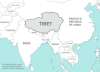
The communist-totalitarian state of China began its invasion of Tibet in 1949, reaching complete occupation of the country in 1959. Since that time, more than 1.2 million people, 20% of the nation's population of six million, have died as a direct result of China's invasion and occupation. In addition, over 99% of Tibet's six thousand religious monasteries, temples, and shrines, have been looted or decimated resulting in the destruction of hundreds of thousands of sacred Buddhist scriptures.
Until 1949, Tibet was an independent Buddhist nation in the Himalayas which had little contact with the rest of the world. It existed as a rich cultural storehouse of the Mahayana and Vajrayana teachings of Buddhism. Religion was a unifying theme among the Tibetans -- as was their own language, literature, art, and world view developed by living at high altitudes, under harsh conditions, in a balance with their environment.