




Dharamshala — Two Tibetan monks from the Nyarong Monastery in Nyarong County, eastern Tibet, jumped into a river to escape arrest by Chinese authorities. Chinese officials forbid young Tibetans from becoming monks and entering monasteries. If young men are caught residing inside a monastery, they face immediate arrest and imprisonment.
Under Beijing's strict religious policies, Chinese officials explicitly forbid young Tibetans from becoming monks or entering monasteries. These regulations are designed to steer youths away from traditional monastic education and toward state-run schools. If young men are discovered residing inside a monastery, they face immediate arrest, detention, and harsh imprisonment.
The Chinese government enforces strict laws barring children under the age of 18 from entering monasteries or receiving traditional monastic education, systematically cutting off the primary path for young Tibetans to become monks. To replace these traditional institutions, authorities have shuttered local Buddhist and private language schools, leaving families with virtually no choice but to send their children to state-run, colonial-style boarding schools.
The Chinese government forcibly placed thousands of children as young as four from their families in to the boarding school and students are forbidden from practicing Buddhism, wearing blessing cords, or speaking their native language (Tibetan). Instead, they are subjected to mandatory political indoctrination, taught an exclusively Mandarin-based curriculum designed to align their loyalty with the Chinese Communist Party (CCP), and structurally disconnected from their cultural identity. Parents who try to resist sending their children to these state schools risk severe penalties, including the loss of public benefits, fines, or imprisonment.
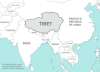
According to reliable sources, two young Tibetans wanted to join the local monastery and study Buddhism, but Chinese authorities banned them from becoming monks and prohibited them from living in the Monastery in Nyarong County, Eastern Tibet. Undeterred, the two youths hid inside the monastery secretly for months. Unfortunately, local Chinese authorities discovered their presence and came to arrest them. Driven by the fear of torture and the harsh imprisonment that detained Tibetans routinely face, the young men jumped into a nearby river to escape and tragically drowned. This heartbreaking incident took place in late January 2026, right before Losar (the Tibetan New Year).
Due to the Chinese government's ironclad control over information flowing out of Tibet, details regarding this tragic incident took months to reach the outside world. Authorities heavily monitored digital communications and directly threatened the victims’ families, the monastery, and local villagers to enforce strict silence. Because of these severe restrictions on the freedom of speech, expression, and movement, independent verification remains incredibly difficult. Consequently, crucial details—such as the young novices' names, their exact identities, the specific monastery involved, and the names of their parents—cannot be fully confirmed at this time.
China-Tibet: The one-thing you need to know:
Over the past 70 decades, there has been ongoing political repression, social discrimination, economic marginalization, environmental destruction, and cultural assimilation, particularly due to Chinese migration to Tibet which is fueling intense resentment among the people of occupied Tibet.
The communist-totalitarian state of China began its invasion of Tibet in 1949, reaching complete occupation of the country in 1959. Since that time, more than 1.2 million people, 20% of the nation's population of six million, have died as a direct result of China's invasion and occupation. In addition, over 99% of Tibet's six thousand religious monasteries, temples, and shrines, have been looted or decimated resulting in the destruction of hundreds of thousands of sacred Buddhist scriptures.
Until 1949, Tibet was an independent Buddhist nation in the Himalayas which had little contact with the rest of the world. It existed as a rich cultural storehouse of the Mahayana and Vajrayana teachings of Buddhism. Religion was a unifying theme among the Tibetans -- as was their own language, literature, art, and world view developed by living at high altitudes, under harsh conditions, in a balance with their environment.