


Dharamshala — United States’ Special coordinator for Tibet Issues Robert Destro said that we celebrate His Holiness' birthday with the knowledge that the Chinese Communist Party has claimed the right to control by force, as they did in the case of the Panchen Lama, the reincarnation of the Dalai Lama. All of us know that Tibetan Buddhism “with Chinese characteristics” is not Tibetan Buddhism. Nor can a person identified and groomed by the Chinese Communist Party ever be the real Dalai Lama.
This article is being reproduced from book CHINA’S COLONIAL GAMES IN TIBET, which was released on September 3, 2026, by Hon’ble Sikyong Penpa Tsering during the festival of Tibet ‘Spirit of Tibet’ at the India International Centre in New Delhi. Based on the proceedings of a long series of international webinars, organised jointly by CHASE and Tibetan Youth Congress, this book presents a surgical view of the games China is playing to maintain its colonial grip on its colonies, especially Tibet.
Robert Destro served as the Assistant Secretary of State in the first US government under President Donald Trump and was responsible for Democracy, Human Rights and Labor besides being United States’ Special coordinator for Tibet Issues. A high point during his tenure in the U.S. government was the passage of ‘Tibet Policy and Support Act-2020’. He was Commissioner, United States Commission on Civil Rights (1983-89); and Special Counsel to the Ohio Secretary of State for election and voting rights issues (2004-2006).
Professor Robert Destro said that as I extend my congratulations to His Holiness the Dalai Lama on the occasion of his birthday, my thoughts are focused not only on His Holiness’ teachings but also on the role that the Tibetan community around the world plays in the matter of succession and spiritual leadership.
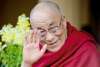
I will beginwith His Holiness's teachings, which include his words and his example. His life's work has been to encourage respect and harmony among the followers of the world's religions. He has urged the world to cultivate what he calls the “human values” of compassion, forgiveness, tolerance, contentment and self-discipline. All of us know from experience that the daily cultivation of each of these human values would make the world a far more hospitable place in which to live and to raise our children. We also know that the daily violation of, or ignorance of these values, sometimes make the world a far more difficult place in which to live. So, throughout his long and exemplary life the Dalai Lama has become just as much a teacher and exemplar of “human values” for the world as for the Tibetan people. He is the very personification of Tibet as a place, as a people, and as a culture that is shaped by its language and the practice of Tibetan Buddhist faith. So, on his birthday we, along with rest of world, pray that he continues to lead a vibrant and healthy life for many more years. And, with the vast majority of the world, we encourage and pray that the Tibetan community will rise to all the challenges it faces as it attempts to follow in his footsteps.
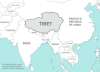
I want to address the remainder of my comments to the Tibetan community at large, which has worked so hard to preserve the language, culture and faith that make Tibet, Tibetans, and Tibetan culture unique. Yours is a critical mission, as all of you know far better than I do. Tibet is far more than a place. It is a unique environment that has shaped the culture and outlook of its people for generations. It is the source of incredible physical beauty, the source of great rivers on which the livelihood and lives of many millions depend. It is a jewel, treasured by all who know of its natural beauty, its culture, and the passion of its people. Its future and the world's understanding of Tibet are in your hands. His holiness is, as all of us so deeply appreciate, far more than a spiritual leader. His voice and his thoughts on the right order of things and on the future of the Tibetan people set the tone not only for this celebration of his life and his teachings, but also for our own thinking about the future of the Tibetan people.
Let us consider the “human dimension” of the challenges facing the Tibetan community worldwide. I cannot emphasize enough the importance of our common humanity in this discussion. As an American, I firmly believe that the words of our Founders written in the Declaration of Independence, express a universal truth. It is “self-evident” that “All men are created equal and that they are endowed by their Creator with certain unalienable rights and that among these are life, liberty and the pursuit of happiness”.
The truth of this statement does not depend on culture. The truth of the statement does not depend on the whim of a party, of a government official, or of any majority, temporary or permanent. They belong to each of us as members of the human family. And, as a Catholic Christian, I firmly believe as well that each of us as a human being is called to a unique mission by our Creator, Who has endowed each one of us with unique gifts, with a unique history, and with the unique vocation to be of service to our families, our communities and our respective nations. This is the “human dimension” of human rights, that is so often lost in our sometimes acrimonious arguments about the right order of things in society, about the priority of the individual versus the collective, and about the right and duty of every individual and community to preserve and develop the unique gifts that have been conferred on each of us by our Creator.
His Holiness' “Middle Way Approach” to preserving the unique nature of Tibet and the freedom of the Tibetan people as a unique community within the people's republic of China is a case in point. The middle way approach requires active engagement with each of the human values he identified. Every society that hopes to survive in the long term must exemplify and rest upon those values. His holiness's own life and experience show, first and foremost, the importance of self-discipline and the need to recognize that, when there is a great disparity of power, as there is between the people's republic of China and the Tibetan people, peaceful alternatives must be developed and presented, and then must be sought without conceding an inch of principle – despite the pride and vanity of others.
Given our community commitment to preserving that which makes us unique as individuals and communities, the Tibetan community must find not only the strength to tolerate the arrogance of those who would enslave them and the rest of us, but also the compassion and wit needed to devise a strategy of resistance and self-preservation. Our “middle way” must acknowledge the humanity of the oppressor and the human weaknesses and insecurities that come with our common humanity. Only then can we find the strength to forgive and to set ourselves free to embark on that middle way toward the preservation of the language, culture and religion that makes Tibet and Tibetans uniquely suited to following the middle way approach His Holiness has set out for all of us.
We celebrate His Holiness' birthday with the knowledge that the Chinese Communist Party has claimed the right to control by force, as they did in the case of the Panchen Lama, the reincarnation of the Dalai Lama. They have done so consistently, as in the case of the Catholic Church in China; in the case of Hong Kong; in the case of the Uyghur people of Xinjiang; and in the case of the Mongolian people. They will seek to impose their materialist and communist ideology precisely in order to eliminate that which makes each of these communities unique. It is their uniqueness itself that is the threat and the Chinese Communist Party will ruthlessly seek to subsume it into the collective materialism and uniformity that President Xi Jinping has described as communism “with Chinese characteristics”.
All of us know that Tibetan Buddhism “with Chinese characteristics” is not Tibetan Buddhism. Nor can a person identified and groomed by the Chinese Communist Party ever be the real Dalai Lama. We have seen with our own eyes the genocide “with Chinese characteristics” of the Chinese Communist Party and against the Uyghur people in Xinjiang and its campaigns against Mongolian people and all others who struggle to build their lives, their futures and communities on the gifts and beliefs that make them unique.
On this the 87th anniversary of the birth of His Holiness, we should commit ourselves to preserve that which makes each of us unique, and that which makes the community of Tibetans unique. We must work together to preserve a community of Tibetans worldwide that maintain its unique Tibetan characteristics. This I humbly submit to you is the middle-way and it is for you with the support of all of us to walk it.
(For interested readers this book is available through vijaykranti.com)