
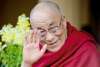


New Delhi — Professor Samdhong Rinpoche describes what makes His Holiness the 14th Dalai Lama unique and states: "His reasoning is always based on the realities of the past, present and future. He is not carried away only by the historical facts. He is never carried away by emotional waves either. And apart from that, he has a good understanding of the human mind and human heart. For ordinary people this is a difficult task."
This article is being reproduced from book CHINA’S COLONIAL GAMES IN TIBET, which was released on September 3, 2026, by Hon’ble Sikyong Penpa Tsering during the festival of Tibet ‘Spirit of Tibet’ at the India International Centre in New Delhi. Based on the proceedings of a long series of international webinars, organised jointly by CHASE and Tibetan Youth Congress, this book presents a surgical view of the games China is playing to maintain its colonial grip on its colonies, especially Tibet.
Professor Samdhong Rinpoche and former Kalon Tripa said, "the question was “What has been the significance of the institution of Dalai Lama for Tibet in the past?” and “How you do look at the major contributions of present 14th Dalai Lama in the on-going national crisis of Tibet. Especially since China occupied Tibet in 1951?” And the third point is that “China is making claims that the entire authority for identifying and installing the next Dalai Lama belongs exclusively to the Communist regime of China." So, as a senior citizen and practitioner of Tibetan culture and traditions how do I evaluate this Chinese claim?” To deal with such important issues it is a difficult task to do full justice to all these issues.
"First the institution of Dalai Lama. The first Dalai Lama was in the 15th century and was contemporary with the TsongKhapa as his disciple. As Gedun Drub he founded the Tashi Lhunpo Monastery in Shigatse. He was a great scholar and author of many treatises. He passed away at the age of 84 since he was not reincarnated Lama so his disciple did not tried to find his reincarnation. But after few years a eight year boy born nearby place visited Tashi Lhunpo monastery and proclaimed he is reincarnation of Gedun Drub and recognized his belongings and disciples accurately. Therefore his disciples accepted the boy as the reincarnation of Gedun Drub and enthroned in Tashi Lhunpo and his ordained name as Gedun Gyatso. He was the first recognized as reincarnated Lama in the Gelug tradition. He became a great scholar and later on shifted on Drepung monastery and became the chief abbot of Drepung monastery. He built his residence in Drepung monastery, which was named as GadenPhodrang and since then the successive Dalai Lamas used that residence. After him the disciples search for his reincarnation, who was born near Lhasa recognized and enthroned at GadenPhodrang in Drepung monastery. He was named as Sonam Gyatso. He also became great scholar and famous teacher of various traditions of Buddhism in Tibet. He was invited by Mongolian rulers and begin the Priest-Patron relationship between Dalai Lamas and Mongolian rulers. The people of entire Mongolia and surrounding territories became his devoted disciples. The Mongolian rulers offered him the title of ‘Dalai Lama Vajradhara’, which means ‘the ocean of wisdom’ in gratitude of his teachings. Since then this institution came to be known as ‘Dalai Lama’. He passed away in Mongolia and his reincarnation was also born in Mongolia and named Yonten Gyatso. After recognizing the reincarnation brought to Lhasa and enthroned as the fourth reincarnation of Gedun Drub in Drepung Monastery. After him the great fifth Dalai Lama was found in Chonggye, recognized and enthroned in Drepung Monastery and named as NgawangLosang Gyatso. Although the title of Dalai Lama was conferred to the third reincarnation of Gedun Drub, but now the two previous lineage also count in the series of Dalai Lama as the first and second. It was since the fifth Dalai Lama that this institution acquired the status of the political ruler and the supreme spiritual leader of Tibet. One of the Mongolian warriors conquered Tibet when it was divided into many small principalities. He conquered and united all of them under the fifth Dalai Lama. It was 1642 since when the sovereign government of Tibet was established under the fifth Dalai Lama and the Dalai Lama became the symbol of unity and sovereignty of Tibet.
"The 13th Dalai Lama ruled Tibet for much longer time as compared to the earlier Dalai Lamas. It was during his period that Tibet was exposed to the international situations because Tibet had to face two foreign invasions. One was from the British India and the other was from China. That is how the 13th Dalai Lama become internationally known and was engaged in international relations many times. This also brought Tibet into the international limelight. It was in his period that many reforms and developments took place in Tibet.
"And as far as the importance and contributions of present Dalai Lama is concerned it is very difficult to review or to sum up in a short time. It was 1952 when I was a 14 years old boy. I received a teaching from the junior tutor of His Holiness. It was time when the Tibetan people did not know much about the real personality of the fourteenth Dalai Lama, who himself was very young – just 18 -- at that time. His teacher told us that the present Dalai Lama was highly knowledgeable, may be more that all previous 13 Dalai Lamas. It was quite difficult for us to believe that. But now we realize that it was indeed very true.
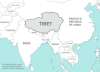
"Today we can see how he has lead Tibet as a nation and its people in a very difficult time. Historically Tibet never faced this kind of domination and destruction from any outsider. Tibet was invaded by the communist China at the end of 1949 and 50 and at that time the Dalai Lama was only 15 years old. Then the regents realized that they were not able to lead the nation. Traditionally the political power would come to the Dalai Lama at the age of 18 when he becomes major. Yet he was being requested by the Tibetan people to take the charge of the political reign when he was only 15 years old. That is how he was given the political leadership of the nation at the age of 15.
"The so called negotiation with the Chinese Communist regime concluded with what they called as the ’17- Point Agreement’. It was signed under duress. But Dalai Lama had played a great role to avoid larger conflict and destruction and killing of people by the Chinese. In 1954 he visited China and India in 1956 and 1957. Finally all his efforts to reconcile with China under the so-called ’17- Point Agreement’ and all other efforts failed. China was able to transport its military force and equipment into Tibet and the repressive measures had increased. Finally in 1959 his life was in danger. Then he had to escape to India. And after reaching India his immediate challenge was to handle the problems of establishment of Tibetan refugee camps and to look after more than 80,000 refugees who had followed him in the wake of Chinese atrocities.
"It was a gigantic challenge to take care of those refugees and also re-establishment of monasteries, learning centres and schools for education of children. He focused at the welfare of the Tibetan people and take necessary steps to preserve and promote the Tibetan culture. This was a huge amount of work which he handled almost single headedly with the help of government of India and the people of India. And he has been not only able to take care of the refugees and help them to survive but also to preserve their Tibetan identity, culture and spiritual heritage. This is surely a great contribution by him.
"I would also like to discuss how he creates his vision, how he makes his dreams and how he plans for the future to turn his vision and dreams into a reality. So if you can understand his mind-set only then you will be able to understand the fourteenth Dalai Lama, his significance as well as his contributions. The 14th Dalai Lama’s approach to his vision and to his dreams is guided by his pragmatism and being practical, based on realism. Mostly the traditional people who are trained in spirituality and tradition, they mostly leap into idealism. They are not able to realize the realistic situation from time to time and also to go with the change of time or to take decisions according to the needs of the people. This pragmatism and being realistic and practical is the secret of his success in such a difficult situation. And this is what makes him different from previous 13 Dalai Lamas.
"His reasoning is always based on the realities of the past, present and future. He is not carried away only by the historical facts. He is never carried away by emotional waves either. And apart from that, he has a good understanding of the human mind and human heart. For ordinary people this is a difficult task. They are always carried away by the force of present situation as well as the waves of emotions. And by this way his rationality and his way of analysing things are based on few very fundamental principles. Among those fundamental principles one important thing is the ‘reality of interdependence’. This interdependence is a basic principle of the Buddhist philosophy which says that everything is arising or comes into being or has the existence or recognition interdependently. And that nothing can exist independently or without depending upon any other thing. So interdependent nature needs to take care of all such surrounding things on which the things are dependent. And his second fundamental principle is the ’oneness of all living beings’. According to this principle all human beings and other living beings are basically same. Everyone is seeking pleasure and not happy with the misery. And at the same time they have the right to seeking pleasure and avoiding the misery, and everyone has the capacity of pursuing happiness and avoiding the unhappiness and misery. So on this basis all living beings are equal. The equality and oneness of all living beings is the second important principle. Then the third principle is the basic nature or basic quality of human beings. All human beings by nature, they have the potential of unconditional love and compassion. If you look as newly born child is full of love and full of affection and the human nature is not aggressive or not cruel but due to circumstances or outside inflation of negative emotions the human beings become at many times cruel. Otherwise the basic human nature is love and compassion. And then the fourth is a ‘universal responsibility’. Everyone has a responsibility which each one has to perform towards others.
"So these four basic principles the interdependence, oneness of all living beings, basic human nature of love and compassion and the basic nature of human universal responsibility, all his visions and all his efforts and programs are based on these basic principles. And thereby he always thinks that self is a way of taking priority, the others are more important, more gratitude giving to the others than the self, the other is more important than self. And the community or the society is more important than the individuals. And the rights are less important and responsibility and duties are more important than the rights. And cooperation is more important than competition. So these are basic laws on which he makes his future vision. So these are basic principles or basic foundation on which he has always worked and has always planned. He has a dream for a future. And therefore he never conceived the future of people of Tibet separate from the future of all human or human society. And particularly he never thinks of the future or the benefit of the Tibetan people separate from the people of China. And therefore, his way of thinking is of equality or oneness of human beings. So he always thinks of the future visions on the basis of oneness of all human community. And he never thinks of one side as a victor and the other side as a loser. So these basic principles he invented and he has given us the middle way approach how to reconcile and how to find a suitable future for the people of Tibet. Not only for the people of Tibet, a future for the people of China, for the people of world a world free of violence and a world free of competition and a world of oneness and cooperation. So on this basis he has invented and he have given us the middle way approach to seek the future of the Tibetan people, along with the goodness and the future of the all humanity.
"Therefore he always says that he has four commitments – four life commitments. The first is to promote the basic human value of love, compassion and respect to all. Being free from violence and conflict all problems can be solved through negotiation and understanding each other. So this was his first commitment. And second is the spirituality. The religions are very important for many people and therefore all the religions are equally sacred and equally important. Religious harmony will bring a harmonious society among the humanity and religious.
"And then thirdly we have only one home to live that is our small planet earth. To preserve this planet earth, the relationship of interdependence between nature and humanity or nature and the living creatures should be harmonious. And therefore take care of the environment, eco balance and the eco system. He is much concerned about this.
"And then fourthly to preserve and promote ancient Indian heritage and Indian wisdom, which is preserved in Tibet. The ancient Tibetan Indian wisdom is beneficial for the future of the entire living creatures on this planet earth. Because this wisdom tells you how to solve all problems without any competition and without any violence. He also says that the 20th century was full of violence the 21st century must be free from violence, a violence-free century and a century of dialogue. As long as the living creatures, particularly human beings are there, there are bound to be some differences and some conflicts. All these conflicts can never be solved through violence or through struggle. This can be amicably solved by love, compassion and dialogue and understanding and faith in each other. He always talks about the universal responsibility which is one of his greatest contributions. Then he talks about the secular ethics. And also to be friendly with the nature and to preserve the natural environment. These things are his global contribution for the future of the world. And this is now mostly recognized by the people.
"Another significant thing which I must mention briefly is his dialogue with the modern scientific people and modern scientists. For the last almost 40 years he has been regularly engaged with them to have a dialogue between the Buddhist ancient science and modern scientific knowledge, particularly in the field of science of mind. And in this field he has contributed a great deal and I think it would give tremendous results in the future. After a few centuries the history will recognize this kind of seeds which he has shown during his lifetime. The modern scientific community is now realizing that all the traditional wisdom and knowledge cannot be considered as unscientific. So the modern science can take many benefits and directions from the ancient wisdom which has been very well established and approved.
"These are few more things which I would like to just hint. Of course you can go into the details elaborately. He has always kept hope and he always believed that all the humanity can resolve any kind of problem through love and compassion, dialogue and understanding each other. This is the direction we are looking forward to resolve the Tibet problem in a very amicable way with the help of all human society and particularly the people of China. The present situation cannot remain permanent.
"Now the question is about who will choose the next Dalai Lama? The communist China repeatedly tells that the choosing and recognition of the Dalai Lama is the exclusive prerogative of the central Chinese government. The first question is what does it mean the central government will decide? Does the central government of China which claims to be a communist does believe into the continuation of consciousness and rebirth after death? Do they believe that human consciousness does not come to an end during the time of death and it will have another birth thereafter? If they believe in this then they should not talk about the dialectic materialism because the dialectical materialism is based on the principle that the mind is the quality of the matter and when the matter ceases the mind also ceases and after death there's no continuation of consciousness. Then they have to change this belief. If they do not believe this principle and they do not believe birth after death and continuation of consciousness then their talk about recognition of the next incarnate Dalai Lama is just hypocritical for political reasons or for any other reason they are inventing about this.
"They are today talking about the ‘tradition’ or the ‘past’. There is no tradition of what they are claiming about the so called ‘golden urn’. During the 18th century when Tibetans have had a close relationship with the Manchu empire in central China, it was the non-Han Manchus who were ruling over the Hans. At many times the Tibetans would seek support from them (the Manchu kings). At that time they had suggested 29 points about how to improve the efficient work of the Tibet government and in which they also suggested the Dalai Lamas, Panchen Lamas and other high ranking Lamas should recognized through the lottery from the golden vessel. But even after that suggestion the 9th, the 10th, 11th, 13th& 14th Dalai Lamas were selected in the traditional Tibetan way without any Manchu or Chinese interference. Only the 12th was selected through the golden vessel combined with the Tibetan religious rituals. There is no such tradition, there is no such role, there is no such past heritage of recognition or selection through this method. We have latest experience of Panchen Lama when the Chinese government tried to select and impose the Panchen Lama of their choice on the Tibetan people. What happened to him? Have Tibetan people accepted him? Could it solve the Chinese’ purpose? This is very ridiculous.
"So I never react when China says something about choosing Dalai Lama of their own liking. Let them do the way they are saying. But they will have no purpose. There will be no recognition. No people of Tibet and no people in the world would recognize it or would believe it. So therefore we need not worry what the Chinese government is repeatedly saying because they have some kind of fear in their mind. They have some uncertainty in their mind. So therefore to take care of these uncertainties and their fear they are talking about this and it need not to be reacted to. It does not deserve to take note of it. So therefore i just ignore what the Chinese government says.
"His Eminence Professor Samdhong Rinpoche (Birth name : Lobsang Tenzin) is the 5th incarnation of the lineage and a fully ordained Buddhist monk. A highly respected Buddhist scholar and a renowned philosopher, he served as the elected Kalon Tripa (Prime Minister) (2001-2011) of Central Tibetan Administration under direct leadership of His Holiness the Dalai Lama. Born in Eastern Tibet in 1939, he entered native Buddhist Monastery in 1943 for basic education and joined Drepung Monastery in Lhasa in 1951 for higher learning. He took political refugee in India in 1959 and since then served the Tibetan community as a Teacher and School Principal of various schools and Director of Central Institute of Higher Tibetan Studies, Sarnath, Varanasi. Apart from Buddhist canon he studied the teachings of Mahatma Gandhi, AcharyaVinobaBhave, JidduKrishnamurti etc. He is a believer of Buddha’s teaching of non-violence and Gandhian method of practicing non-violence in socio-economic and political spheres. He is trying to promote the basic idea of sustainable, need based utilization, localization and non-centralization of economy and governance, which can only avoid violence of any form," Rinpoche concluded.
(For interested readers this book is available through vijaykranti.com)